Recently I was reminded of one of the great shortcomings of the wine industry and of wine appreciation in the United States. A few friends and I were discussing ways in which we were "geeky," i.e. our varying pursuits and interests in which we perhaps take a greater than usual level of interest, and zealously pursue an ever increasing cache of knowledge. I copped to being both a music geek and a wine geek. "No," my friend Benjamin corrected me, "you may be a music geek, but you are a wine snob. There are no wine geeks, only wine snobs."
True, perhaps. How many serious wine drinkers can patiently explain what it is we may not like about the cheap commodity wine at a friend's party that motivates us in the direction of a cold beer instead? Or do anything other than nod politely, perhaps offer some faint praise, when someone speaks about a winery that one views as producing inferior, mediocre, boring, or downright dreadful wines?
Prior to my involvement in the wine business, my image of a wine snob was a stereotypical American one: that of a middle aged white male, likely betraying a proper English accent, drinking a well aged claret. Later, it morphed into a slightly younger American dude, wearing khaki pants with a golf polo tucked in, purchasing a case of $100 a bottle Napa cab at the local wine shop. Later on, a thirty something sommelier at a high end restaurant, stashing away bottles of Sine Qua Non. Now, the wine snobs I most often see, occasionally hang with and observe in their natural habitat have done more research. At least they are drinking more interesting wines. They are more likely to open up aged bottles of important producers' 1er cru Burgundy, cult natural wine a la Frank Cornelissen, an aged Cotes du Bourg demi-sec from Huet. It is a franco-centric, critic's darling, tightly allocated, potentially high dollar oriented sport, these gatherings of wine geeks, nay, wine snobs.
The lavishness of it all is not the only thing I detest about such gatherings. Wine is the centerpiece, trumping anything and everything else. It dominates the conversation, an embarrassment of choice bottles polluting the table, people taking a small taste of one cherished, hauntingly beautiful Burgundy before moving to an aged, leathery Barolo. "That's really fucking good," someone may remark before abruptly moving on to what's next, if for no other reason than the fact that a few greedier snobs bogarted the wine.
Do I always dislike tasting great wines, expanding my experience with famous producers in the company of largely kind, generous folks? No, occasionally it's a blast, and a great education. However, and maybe it's because I live in San Francisco, there is a lack of diversity at these tastings; people and wines alike blend into one big abstraction of, well, snobbery.
In European wine producing countries, wine is traditionally seen as a beverage of the countryside, something to slake thirst and consume throughout the day. You need not be wealthy, bourgie, or pretentious to enjoy it. Sometimes I wish the same were more often true here. Most efforts to democratize wine consumption in the US have tended towards the dreadfully boring, consumer advocate model, the dumbed down, crass, social media driven platform, the affluent, luxe lifestyle promoting publications or a combination of all three. If there is currently an effective effort to democratize wine education and appreciation of wines in this country, I am not aware of it. Serious wine study through tasting is still primarily enjoyed by those in the upper levels of the trade, as well as those who are lucky enough to know people who can afford exemplary bottles of wines from important wine growing regions.
Some would argue that wine should not be democratized, that the amount of effort, study and expense to understand it effectively functions as a weed out tool for those who are less serious. I would counter that while this may be partially true, more options should exist for people who are eager to learn by tasting wines, talking to vignerons, and engaging with professionals who take great effort to understand the products which they sell.
Returning to the issue of snobbery, I think my friend was right. I am a wine snob. Just as I'm a food snob and a music snob. I know what I like, and am not afraid to extol virtues as well as cite flaws as I understand them. However, I would like to think that my brand of snobbery is inclusive. Any knowledge should be shared simply for the act of sharing knowledge, not to delight in holding some hidden knowledge over someone else. For me, this is the case because I love learning from other people. My most rewarding discoveries happen this way.
Being an enlightened wine snob is a tough act to pull off. To be honest, I'm still not sure I'm cut out for it. But that certainly would not make me unique; I'm not convinced that many people are. One thing is for certain, however. More serious wine drinkers should aspire towards making the effort.
Tuesday, September 14, 2010


Monday, September 13, 2010
Tomatoes

Today, on this blog: tomatoes. Tomatoes are truly a blessing. I don't care how hot and sticky your east coast summer was, or how how cool and unsummer-like our California summer has been. On either coast, we still have had access to tomatoes, that most delicious of fruits, and though the harvest may not have been the easiest or most abundant, there has been plenty of deliciousness in your local markets. Somehow, life is always better with a regular supply of fresh, locally grown tomatoes around.
We grew our own this year, in a pretty big way. While our seven cherry tomato plants have been very slow growers in our cool Bernal Heights community garden plot (the plants are still flowering and only a few green tomatoes are on the vines), the leaves are still verdant and healthy, the vines only three or so feet high but still thick and sprawling. I know that these will likely be the tastiest of our tomatoes, despite the long wait to pick ripe ones.
In Sacramento, where my girlfriend's parents live a few blocks away from the American River, we have found that the tomatoes love the combination of fertile soil, warmth and sunshine, growing taller than six feet and spreading all over. On Friday we harvested at least 8 lb of cherry tomatoes, eight heirlooms, and about 3 lb of san marzano tomatoes. Prior to that, we have enjoyed a few smaller harvests. There likely will be one more big harvest ahead.
What do we do with this bounty? We have given a lot away. But we have also cooked a lot of simple dishes, or snacked on the tomatoes in some time tested ways. Here is a quick list of ways we have been enjoying:
Taking out the tomato, "apple style."
This one is pretty self explanatory. Add a bit of maldon sea salt, if desired.
Tomato on toast.
Good for breakfast or lunch. I like to rub a raw garlic clove on a toasted slice of levain, something with a good tang and nice, large crumb. Pineapple heirlooms have been a recent favorite. Add olive oil (Frantoia is my long-time brand of choice) and a sprinkle of sea salt.
Cherry tomato sauce.
In good olive oil, cook a bunch of cherry tomatoes until they soften and can be fairly easily squished with a wooden spoon. I have been doing this one somewhere between a fresh, uncooked tomato sauce and a fully cooked one. Add minced raw garlic at the end, stir while still over heat for a minute or so, then add to pasta with some additional olive oil. Great, fresh sauce. Try it over orecchietti with grated cheese.
Classic gazpacho
Here is your ratio: 2.5 lb fresh tomatoes, 1/2c olive oil, 2 slices bread, 1 clove garlic, 2 tbsp sherry vinegar, 1 tsp sugar, salt and pepper. It's very simple. Use a cuisinart or if you're lacking this gadget, you can use a hand-held immersion blender. That's how I do it. I prefer san marzanos since they are less sweet and more likely to be what is used in Spain. Be sure to refrigerate the gazpacho for several hours. This is one of Penelope Casas' recipes so you know that it will be tasty.
a la Chinese
Stir fry kale or mustard greens in olive oil. Season lightly with salt. Add slices of heirloom tomato, along with some soy sauce and a bit of balsamic vinegar. Pepper would be a good addition, as would ground sichuan pepper and possibly fermented black beans. Add a few cloves of minced garlic at the end and stir in well. A few tablespoons of chopped parsley is also tasty on this dish. Serve with scallion pancakes.
Tuesday, September 7, 2010
It's cold in here, my allergies are bothering me and I wish I could write more interesting tasting notes

In the interest of full disclouse, and in an effort to not loose the last 3 of you who are readers and not related to me, I suppose this is a cobbled together post, consisting of a short paragraph with impressions of wines drunk and tasted over the past week. Just so you know what you're in for. Arnot-Roberts Trousseau (08?) from Clear Lake (?!) looked, smelled and tasted pretty much like Trousseau. Not bad. Their Mt Veeder Ribolla was simple and fruity. Gravner grafted, great marketing...2004 and 2002 Montborgeau Savagnin L'Etoile both delicious over the course of the week, more flor qualities to 04, richer fruit in 02. 2009 Clos de Briords is supposed to be the best wine he made or some such but to me it's just another really tasty Briords, why hype this more than needed? 15ish bucks. Everyone knows it's good, buy it; we're not composing email pitches from a home office in Seattle or something here, people...07 Huet Le Haut Lieu Demi-Sec tasting simple, one-dimensional and not right on finish. Grey or RWC, is one worse than the other here? '02 Zilliken Saarburger Rausch Riesling Spatlese really hit the spot, great lithe structure and refreshing acidity, just enough tangy/sweet fruit. '88 Dauvissat Camus Le Clos sounds fancier than it tastes. '88 Preuses had more life in it, more verve. Still, merely a pretty good drink at this point. '95 Noël Verset Cornas smoky, peppery, and tannic. Somewhere there was fruit but smoke, meat, earth and tannin seemed to dominate. Though it was my first Verset and I do appreciate this read from someone who has more experience with these wines than I. '06 Cornelissen Contadino 4 was a pleasant surprise: ripe, expressive red fruits with skins, scruffy herbs, and a real fine grained, non-oak induced tannin structure for such a warm climate, 15% abv specimen. Intriguing.
Shana Tova to all!
Tuesday, August 31, 2010
Check out these DUBS!

Now that I'm not a regularly performing member of JohnStone, I suppose that I don't feel as shy about promoting a new record release. OK, I wasn't shy about doing so before, but all you musicians and artists out there, does it not always seem a wee bit awkward promoting your art? I mean, in an ideal world that's what the publicists, the marketers, and the labels are for, right? However, given the dual realities of the record industry's demise and the ability of social media to work for those who work it hard, why not work it hard, right? I mean, if someone as busy as ?uestlove can tweet throughout the day, any self respecting musician should at least aspire to do the same, right?
As many of you know, Tuesday is the official day for new album releases, whether it is at your local record shop or on iTunes. This Tuesday, I encourage you to check out Dub Confidence, the new release from my former bandmates. These are dub remixes of songs from the Innocent Children album the band released in 2007. If you're not familiar with dub reggae, look for largely instrumental versions of songs where the various components of a song are at turns emphasized, removed, and doused with healthy doses of reverb and delay.
You can check out snippets of the songs on iTunes or CDBaby. If you're so inclined, I'd love for anyone to help in one of the following ways:
A.) Listen to the music
B.) Tell friends about the music
C.) Buy the music
D.) Any combination of A,B, and C
E.) Extra credit! Review the record on Amazon, iTunes, and/or CDBaby.
Alright, that's it for now. But not for the week. For my twitter peeps out there, things may be getting a little more self promotional than usual. Consider yourselves forewarned.
Until the next time, good DUB to you and yours.
Wednesday, August 25, 2010
The job ain't that bad: More notes on old wines
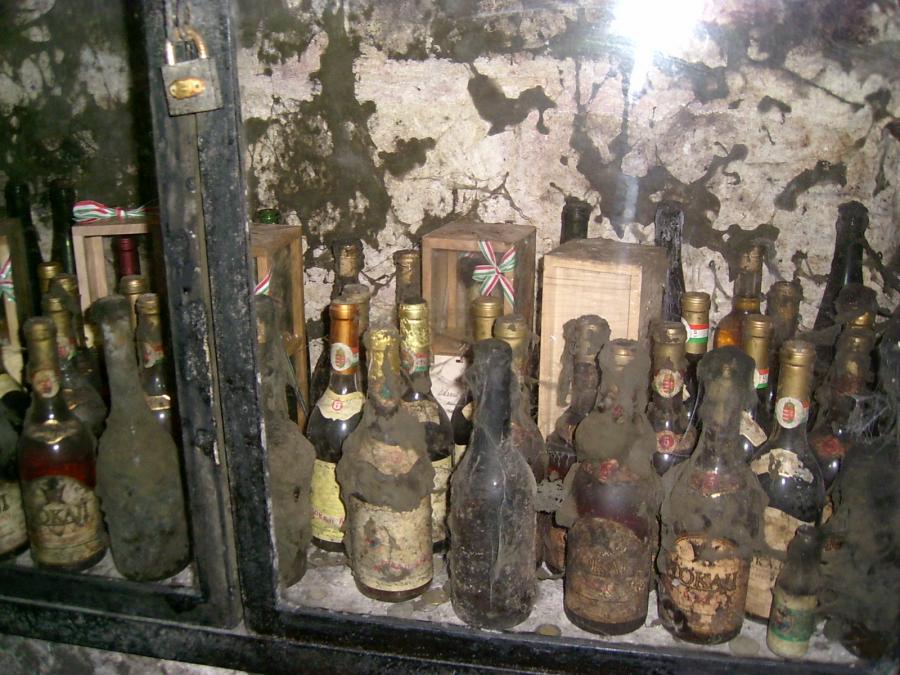
When I'm not stocking, helping customers, tasting with suppliers, reading email offers, deleting email offers, crafting our very own email offers, or conducting staff tastings, I might be tasting through a line-up of curiosities from vintages past. A sampling of one such recent tasting:
1992 Etienne Sauzet Batard Montrachet
While I would argue that this particular wine does not make the case for long-term cellaring of your big, fancy white Burgundy, I had a tough time finding too much fault with it. It was not maderized or otherwise flawed. The nose was creamy, with ripe grapefruit, a hint of marzipan, maybe some botrytis? The palate also showed a creamy, citric quality, with moderate acidity and most impressively, a wonderful texture. A spicy, bitter honey inflected finish. It would be like an aged Auslese if only there had been more residual sugar, higher acidity and lower alcohol.
1986 Beringer Private Reserve Cabernet Napa Valley
This was showing terrifically. Red fruits, particularly cherries, with some savory and leafy qualities on the nose, opened up to a lovely palate that semed nearly delicate at this point. Unbeknownst to me, this bottling is not all from valley floor fruit, but rather has a significant chunk of Spring and Howell Mountain grapes in it.
1979 Chateau Palmer Margaux
A favorite from this vintage for many people, many think that the '79 Palmer was the best Bordeaux wine of the vintage, a year which was difficult and which favored the wines of Margaux. Aromatically it did not disappoint, showing a real spicy quality - sort of like a house made chipotle ketchup but more subtle and less sweet. Flavors were savory, with the fruit hanging in and the tannins fully resolved. Subtle, to be sure, but still showing plenty of interest and elegance at over 30 years of age.
1971 Chateau Coutet Sauternes
I don't have that much experience with older Sauternes. Drinking them young, though, holds no appeal for me. The wines conjure up an image of dissolving orange blossom honey and marmelade in sauvignon blanc, and blending by immersion. Climens is always the exception. I don't know why, it just is, I do like that wine. Anyway, this aged sauternes was not quite a revelation, but was really damn tasty. My notes read, "No spit wine." Exotic mango and guava flavors were balanced. The wine reminded me of a very good older Auslese for its texture and sense of balance.
Monday, August 23, 2010
Deux Chinon from '02 and an unexpected pairing

I was craving cab franc. Not a usual wine craving for me in the summertime, more likely a Fall, winter and early Spring craving. That is when I'm more inclined to want to drink something substantial and a bit savory, but with the bright flavors and relative textural lightness where you know you are still in the Loire Valley. Seeing as I live in San Francisco, though, and that July as well as August can well offer many cool, autumnal nights, I caught the Chinon bug and decided to crack open a few.
The Chinons
2002 Philippe Alliet Chinon
A basic bottling from this producer, it was honestly clumsy. It was like an aging, out of shape athlete type of Chinon. The muscle had turned to fat, maybe there was a hint of stale cigarettes on its clothes. The wine was front loaded, with a clipped finish and some brett which was increasingly noticeable.
2002 Olga Raffault "Les Picasses" Chinon
I know, comparing a specific terroir such as this to a basic domaine bottling is not fair. Needless to say, this was the far more enjoyable and complex wine of the two. To my tastes, this is nearly perfectly balanced right now between fruit, acid, tannin structure and secondary development. The wine has silky Chinon texture, terrific fruit purity and real presence on the palate. Given that this bottle continued to develop and drink well over a few days, I would not hesitate to age and re-visit this wine several years from now (in fact I will likely do just that as I have a bottle left). However, it sure is drinking well now.
The Pairing
Ever try Chinon with pesto? While pesto with a crisp Italian white is the more often recommended choice, I found that the slightly herbal, leafy quality of the Raffault Les Picasses complemented the pungent, garlicky, herbal pesto, and provided enough acidity to refresh between forkfuls.
The Trivia
Chinon is also the name of a photographic lens manufacturer. They are supposed to be pretty good.
Sunday, August 22, 2010
SF Natural Wine Week 8/23-8/28
SF Natural Wine week. Do it.
Many thanks to Wolfgang and co-organizer, Nattie Light (just dubbed him that, but I think it's a good nickname that might stick) for all their work putting this together.
For your convenience, I am copying and pasting the schedule of events from their site below:
Monday 8/23 – Terroir Natural Wine Merchant
Time: 6.30pm for the first seating; the second seating is at 9pm.
What: The boys at Terroir – one of the premier natural wine destinations in the US – are hosting a special dinner 3-course dinner with wine pairings in their shop/bar on Folsom Street.
Cost: $80
For more information, please contact Terroir at 415-558-9946
Tuesday 8/24 – Bi-Rite Market
Time: 7pm – 9pm
What: Bi-Rite’s wine buyer, Trac Le, will feature a selection of 6 – 8 everyday natural wine values, available for $20 and under. In other words, wines you can take home tonight for not a lot of money!
Where: Hosted at Bi-Rite’s 18 Reasons space at 593 Guerrero (at 18th St.)
Cost: $10 for members of 18 Reasons; $15 for non-members
For more information please contact Trac Le at Bi-Rite Market at 415-241-9760
Wednesday 8/25 - Biondivino
Time: 6pm – 8pm
What: Local italophile Queen Bee, Ceri Smith, will feature a selection of Italian natural wines at her intimate shop in lower Russian Hill.
For more information, including cost and specific wines being served, please contact Biondivino at 415-673-2320
Thursday 8/26 – Arlequin Wine Merchant
Time: 6pm-8pm
What: Ian Becker, wine director at Arelquin and Absinthe as well as the co-founder of SF Natural Wine Week, will host a walk around tasting featuring the innovative winemakers leading the way for natural wine in California.
Cost: $20
For more information, please contact Arlequin Wine Merchant at 415-863-1104
Friday 8/27 – San Francisco Wine Trading Company
Time: 5:30pm-7:30pm
What: One of San Francisco’s top independent retailers and bastion of fine wine in the fog-bound western half of the city, the San Francisco Wine Trading Company will present natural wines from Europe and North America. Featured producers include La Grange Tiphaine, Occhipinti, Maestro Sierra, Luis Rodriguez, Stave 28 and County Line.
Cost: $15 (including appetizers)
For more information please contact San Francisco Wine Trading Company at 415-731-6222
Saturday 8/28 – The Jug Shop
What: The lovely Floribeth Schumacher will host a tasting of her favorite natural white wines from Italy — mostly Friuli, but also other Italian wine regions. Of course ‘white’ is relative here; expect a few of these to be orange wines.
Time: Afternoon
Cost: $25
Please contact the Jug Shop directly to confirm the exact time of the tasting.
Many thanks to Wolfgang and co-organizer, Nattie Light (just dubbed him that, but I think it's a good nickname that might stick) for all their work putting this together.
For your convenience, I am copying and pasting the schedule of events from their site below:
Monday 8/23 – Terroir Natural Wine Merchant
Time: 6.30pm for the first seating; the second seating is at 9pm.
What: The boys at Terroir – one of the premier natural wine destinations in the US – are hosting a special dinner 3-course dinner with wine pairings in their shop/bar on Folsom Street.
Cost: $80
For more information, please contact Terroir at 415-558-9946
Tuesday 8/24 – Bi-Rite Market
Time: 7pm – 9pm
What: Bi-Rite’s wine buyer, Trac Le, will feature a selection of 6 – 8 everyday natural wine values, available for $20 and under. In other words, wines you can take home tonight for not a lot of money!
Where: Hosted at Bi-Rite’s 18 Reasons space at 593 Guerrero (at 18th St.)
Cost: $10 for members of 18 Reasons; $15 for non-members
For more information please contact Trac Le at Bi-Rite Market at 415-241-9760
Wednesday 8/25 - Biondivino
Time: 6pm – 8pm
What: Local italophile Queen Bee, Ceri Smith, will feature a selection of Italian natural wines at her intimate shop in lower Russian Hill.
For more information, including cost and specific wines being served, please contact Biondivino at 415-673-2320
Thursday 8/26 – Arlequin Wine Merchant
Time: 6pm-8pm
What: Ian Becker, wine director at Arelquin and Absinthe as well as the co-founder of SF Natural Wine Week, will host a walk around tasting featuring the innovative winemakers leading the way for natural wine in California.
Cost: $20
For more information, please contact Arlequin Wine Merchant at 415-863-1104
Friday 8/27 – San Francisco Wine Trading Company
Time: 5:30pm-7:30pm
What: One of San Francisco’s top independent retailers and bastion of fine wine in the fog-bound western half of the city, the San Francisco Wine Trading Company will present natural wines from Europe and North America. Featured producers include La Grange Tiphaine, Occhipinti, Maestro Sierra, Luis Rodriguez, Stave 28 and County Line.
Cost: $15 (including appetizers)
For more information please contact San Francisco Wine Trading Company at 415-731-6222
Saturday 8/28 – The Jug Shop
What: The lovely Floribeth Schumacher will host a tasting of her favorite natural white wines from Italy — mostly Friuli, but also other Italian wine regions. Of course ‘white’ is relative here; expect a few of these to be orange wines.
Time: Afternoon
Cost: $25
Please contact the Jug Shop directly to confirm the exact time of the tasting.
Subscribe to:
Posts (Atom)
